Why Peer Review Is Bought on a Building With Few Precedents
By Michael Stern, JDS Development Group

A second structural engineer opens the calculations of the first and works the problem again from the beginning. On a tower whose behavior no code table describes, that duplicated effort is bought on purpose, and it belongs inside the design schedule rather than at the end of it. This is written for developers, engineers of record and construction managers about to take on a site where the ordinary references stop being useful.
What Structural Peer Review Actually Is
Peer review is an independent structural engineer, retained separately from the design team, reading the load path, the analysis assumptions and the calculations that sit behind a design. The reviewer does not take over the design and does not become the engineer of record. The reviewer reads what the team produced and says where the reasoning does not hold.
On a conventional building the code has already done most of that work. Wind loads come from a published standard, the framing type has been built thousands of times, and the questions a reviewer would ask were answered decades ago by the buildings that came first. On a tower with few precedents none of that inheritance is available.
So the review stands in for a reference. There is no comparable structure to point at, and an independent reading by someone who has run similar analysis is the closest thing to a precedent the project can buy.
There is no comparable structure to point at, and an independent reading by someone who has run similar analysis is the closest thing to a precedent the project can buy.
What the reviewer looks at is narrower than people expect and deeper. The geometry of the load path down to the foundation, the assumptions behind the wind loading, the damping the design relies on, the uplift on one side of a narrow footprint, the serviceability of the upper floors, and the stability of the structure during construction rather than only when finished. Each of those is a place where an unusual building leaves the territory the code covers.
Why the Reviewing Agency Wants a Second Engineer
The agency that approves the structure has to be satisfied the design is right, and on an unusual building it cannot reach that conclusion from the code alone. Independent review is how a reviewing body gets comfortable with a structure its own tables do not cover. In New York that conversation runs through the Department of Buildings, and what it requires is specific to the site and changes over time.
The same logic sits inside the standards themselves. The load provisions engineers work from, published as ASCE 7, are written for buildings that behave in understood ways, and they say plainly where they stop being applicable. A structure outside that range gets analyzed rather than looked up.
That is worth saying clearly, because the usual assumption runs the other way. Most people read an independent review as a sign that somebody doubts the engineer. In practice the engineer of record asks for it as often as the agency does, because a design that has survived a hostile reading is a design its author can defend.
The building code is a separate instrument from the zoning that made the building possible, and it is administered by different people with different questions. I wrote earlier about how party wall rights fix the edge of a new building, and the same pattern holds here. The constraint that governs the structure is rarely the one that governed the envelope, and a team that conflates them will be surprised twice.
How Peer Review Is Scheduled Into the Design
Because the review produces questions that change drawings, it has to arrive while the drawings can still change. A review delivered after the documents are complete is a report nobody can act on without losing months of schedule. So it gets booked against the moments when the structural scheme is committed, and those moments are identified early.
The sequence matters more than the calendar. The scheme has to be far enough along that the load path is legible, and not so far along that the facade, the elevators and the mechanical layout are already locked to it. On the towers I have built that window is narrower than anyone plans for, and it closes quietly.
A second pass usually follows on the detailed design, once the members are sized and the connections are drawn. On the hardest structures a third pass looks at the construction sequence, because a building that is stable when complete can be unstable on the way up. Each pass is scheduled like a structural element, with a duration and a predecessor, because that is what it is.
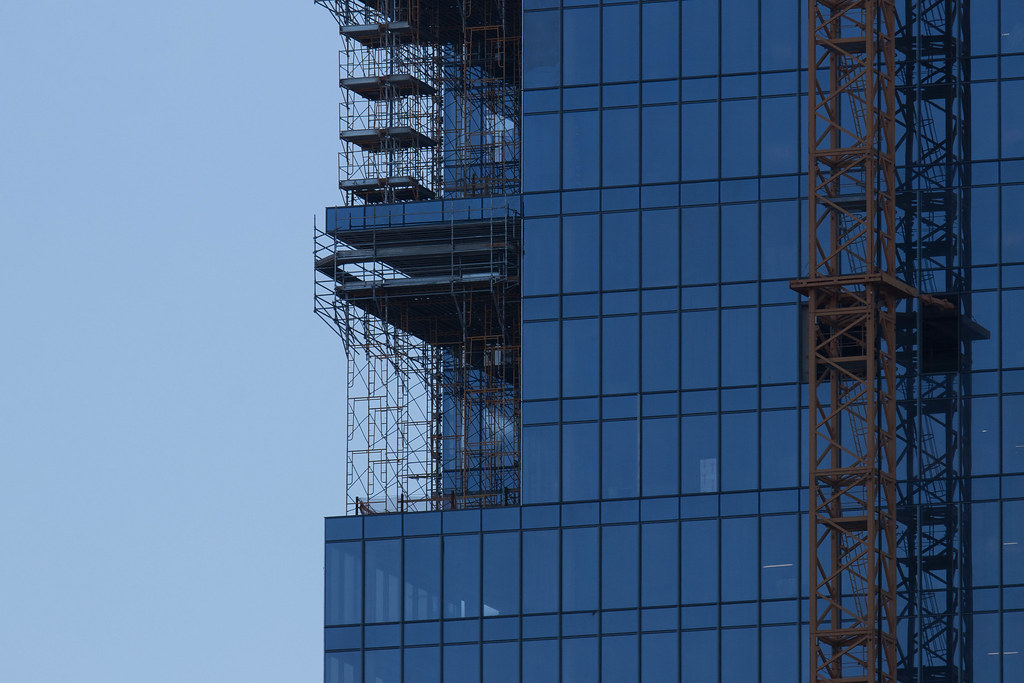
111 West 57th Street is the tallest and most slender residential building in the Western Hemisphere, built in the courtyard of the landmarked Steinway Hall and designed by SHoP Architects. A building at that slenderness has no table to check its behavior against, so the analysis and the reading of the analysis are the evidence that it works. The order in which that work happens decides the schedule of everything above the foundation.
It also decides what can be procured. Long lead structural items cannot be released until the scheme they belong to has stopped moving, and the scheme stops moving when the review is answered rather than when the design team says it is finished. That is the practical reason a developer should care about a process that looks like professional housekeeping.
Where Peer Review Is Harder Than It Looks
Here is the part a competent engineer may think I have wrong. I believe independent review should be commissioned by the owner and paid by the owner, not routed through the design team, because a reviewer engaged by the people whose work is under review is reading with a conflict nobody intended. Respected engineers hear that as a slight on professional independence, and they have a fair argument, since the design team is also the party best placed to judge which reviewer is genuinely qualified.
My position comes from watching where the pressure lands. A reviewer who is going to raise an expensive question raises it more readily when the question goes to the owner first. I accept that this arrangement puts a developer in the middle of a technical argument, which is a place developers are generally not useful.
The honest limit is that review adds time and produces disagreement between professionals that has to be resolved before the drawings can be issued. That is uncomfortable for everyone, including me, and it is also the whole purpose. A review that produces no questions was either unnecessary or was not a review.
The other limit is narrower and worse. Review confirms that the design is consistent with its own assumptions, and the assumptions on a building with no precedent are themselves judgments. A careful reviewer can agree with every calculation and still be agreeing inside a frame nobody has tested at that scale, which is why the monitoring of a finished tower matters as much as the review of an unbuilt one.
The engineer of record owns the outcome whatever the reviewer concludes, and that never moves. A project deciding whether it needs independent review should put the question to the engineer of record and the code consultant together, read against the current requirements of the reviewing agency rather than against the practice of the last job. The International Code Council publishes the model documents most of those requirements descend from, which is a useful place to begin reading and a poor place to stop.
A building with no precedent gets designed twice on purpose, and the second reading is what makes the first one trustworthy.
Michael Stern is the founder and chief executive officer of JDS Development Group.


